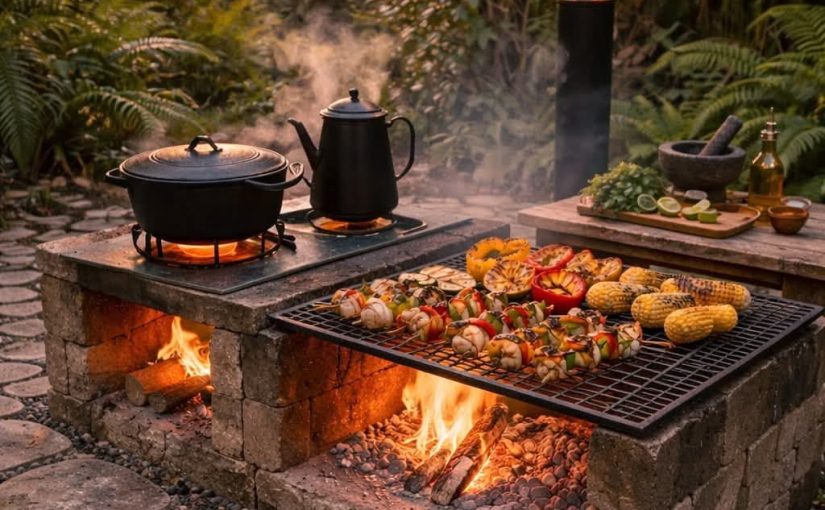
1. Know Your Grill and Master Temperature Zones
Before lighting any fire, understand your specific grill’s personality. Charcoal kettles have hot spots directly above coals and giibbqirvine.com cooler outer edges. Gas grills often run hotter at the back and cool near the front opening. Perform the bread test: place sliced white bread across the entire grate, close lid, cook 2-3 minutes. Toast patterns reveal hot and cool zones. Always create two temperature zones regardless of grill type. For gas, light one side on high, the other off. For charcoal, pile 75% of coals on one side, 25% on the other. Your hand is a thermometer: hold palm 5 inches above grate. Painfully hot after 2 seconds equals high heat (450-550°F) for searing. After 4 seconds equals medium heat (350-450°F) for chicken and vegetables. After 6 seconds equals low heat (250-350°F) for slow cooking. Never guess temperatures—buy a $15 oven thermometer to place on grates. For gas grills, always preheat with lid closed for 10-15 minutes before cleaning or cooking. For charcoal, wait until coals are covered with gray ash (about 15 minutes after lighting) before spreading. Finally, mark your grill’s vent positions for future reference to replicate successful cooks.
2. Essential Tools Every Beginner Must Own
A $100 kit of proper tools outperforms expensive grills. Priority purchase: dual-probe digital thermometer—one probe for grate temperature, one for meat internal temperature. Instant-read thermometers are backups. Long-handled spring-loaded tongs (16 inches minimum) with scalloped edges grip without piercing. Offset spatula for flipping fish and eggs. Grill brush with brass bristles (stainless steel can scratch porcelain grates) plus separate scraper for heavy buildup. Chimney starter for charcoal—never lighter fluid again. Two pairs of heat-resistant gloves (one for handling grates, one cotton-lined rubber for food). Disposable foil pans for indirect cooking and resting. Spray bottle for flare-ups. Rigid wire brush for cleaning cooking grates. Charcoal storage bin with tight lid. Grill cover fitted exactly to your model. Butcher paper and heavy-duty aluminum foil. For gas owners: full propane tank backup and leak detection spray (soapy water in spray bottle). For everyone: fire extinguisher rated for grease fires (Class B or K), kept 10 feet from grill. Sharp chef’s knife and cutting board with juice groove. Apron with pockets for thermometer and tongs. Avoid flimsy forks, plastic spatulas, and anything that melts. Maintain tools by oiling wooden handles and never submerging hot tools in water.
3. Pre-Grilling Preparation That Prevents Disaster
Success starts 30 minutes before food touches grate. Remove meat from refrigerator; cold meat contracts muscle fibers and cooks unevenly. Salt steaks and burgers 40 minutes prior or immediately before cooking—never in between. Pat everything dry with paper towels; moisture creates steam barrier preventing browning. Trim visible fat to 1/4 inch thickness to reduce flare-ups. Oil the food, not the grates: brush high-smoke-point oil (avocado, canola, grapeseed) onto meat and vegetables. Preheat grill fully with lid closed, then clean grates thoroughly. To oil grates safely, dip folded paper towel in oil, hold with tongs, and wipe across hot grates 3-4 times. Never spray nonstick spray directly onto hot grill—flammable propellant causes fireballs. Organize your cooking station: seasoned meats on one platter, clean platter for cooked foods, sauces and spices within reach, timer set, trash bucket nearby. Check propane levels by pouring warm water down tank side; condensation line reveals fuel level. For charcoal, ignite chimney starter on concrete surface away from structures; pour ashed coals carefully. Have a heat-safe landing zone for hot utensils. Finally, inform household members when grill is active and set a timer reminder to check food every 5-10 minutes.
4. Cooking Techniques That Eliminate Guesswork
Follow this simple flowchart for every grill session. Step one: never close lid without first checking that both zones are active. Step two: place food on hot zone to sear—timing depends on thickness, not intuition. For 1-inch steaks: 3 minutes first side, flip, 2 minutes second side, move to cool zone. Step three: insert thermometer horizontally into thickest part after flipping. Step four: move food to cool zone to finish cooking gently. Flip only once; constant flipping dries meat and prevents crust. Rule of thumb: if it sticks, it’s not ready to flip. Never press burgers or steaks with spatula—this squeezes out flavorful juices. For chicken, start skin-side down on medium heat (not high) to render fat slowly without burning. For vegetables, toss in oil and salt before grilling directly over medium heat. Use foil packets for small items like green beans or shrimp. When adding sauce, wait until last 5 minutes of cooking to prevent sugar burning. Remove food 5°F below target temperature—carryover cooking finishes the job during rest. Rest meat on cutting board tented with foil for 5-10 minutes minimum. For beginners, write target temperatures on masking tape stuck to grill lid: chicken 165°F, pork 145°F, burgers 160°F, steak 135°F. Practice with inexpensive cuts like chicken thighs before attempting brisket.
5. Common Beginner Mistakes and How to Fix Them Immediately
Flare-ups happen when fat drips onto flames. Fix: move food to cool zone, close lid to starve fire of oxygen, spray lightly with water. Never use water on grease fires—use baking soda or fire extinguisher. Dry chicken? You cooked at too low temperature or too long. Fix next time: brine poultry 1 hour, cook at 375°F minimum. Burnt outside, raw inside? Too much direct heat. Fix: sear 2 minutes per side then finish in 350°F oven or cool zone. Sticking to grates? Grates weren’t hot enough or clean. Fix: preheat 15 minutes, brush clean, oil food not grates. No smoky flavor? Use dry wood chunks (not chips) directly on charcoal or in gas smoker box. Flavorless rub? Increase salt content or apply rub hour before cooking. Soggy vegetables? Crowded the grate—leave space between pieces for steam escape. Tough brisket? Didn’t cook to 200°F internal temperature or skipped rest period. Broken thermometer? Test in boiling water (212°F at sea level) and ice water (32°F). Propane ran out mid-cook? Finish in oven at same temperature. Remember: every expert was once a beginner. Keep a notebook logging each cook’s temperature, time, weather conditions, and results. Master these basics in 5-10 grilling sessions, and you’ll confidently host any cookout.